
MedSniper®: Addressing the Airway Challenges EMS Providers Face Every Day
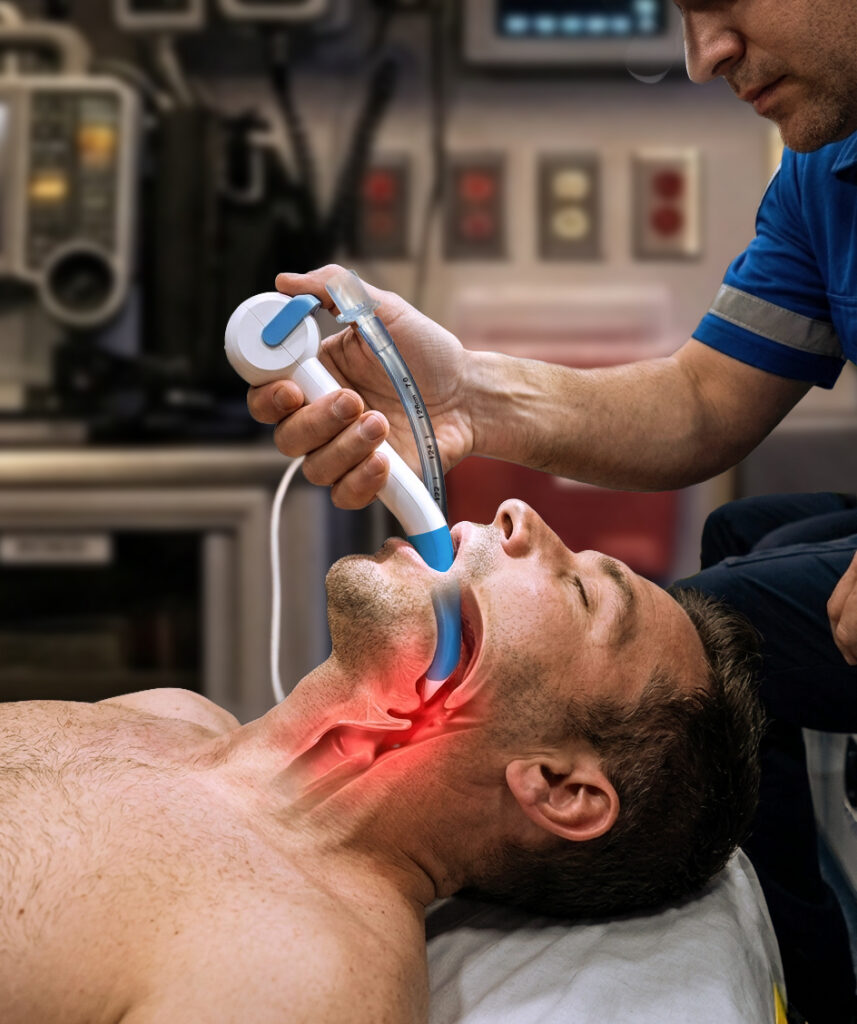
Airway management in emergency care is rarely predictable. A patient may be on the floor, inside a vehicle, in a moving ambulance, or positioned in a way that makes direct visualization difficult. Add trauma, obesity, restricted neck movement, secretions, or poor lighting, and a routine intubation can quickly become a challenging one.
For EMS providers, emergency clinicians, respiratory therapists, and critical care teams, visualization remains one of the most important parts of successful endotracheal intubation. The better the view of the airway, the better the clinician can identify the epiglottis, vocal cords, and glottic opening before advancing the tube.
MedSniper® is designed for these real-world airway challenges. It combines video visualization, flexible navigation, and guided tube placement in a lightweight, single-use device built for emergency, critical care, anesthesia, and prehospital environments.
A Clearer View of the Airway
MedSniper® uses a high-definition camera with six integrated LED lights to provide real-time visualization of airway structures during intubation. Instead of relying only on a direct line of sight, clinicians can view the airway on a compatible smartphone or tablet.
Using a USB Type-C connection, the device can be connected directly to compatible mobile devices, allowing clinicians to monitor the airway in real time throughout the procedure. The system also supports image capture and video recording, providing opportunities for clinical documentation, training, quality improvement, and post-procedure review.
This can be especially useful in EMS and transport settings, where ideal patient positioning is not always possible. In confined spaces or low-light environments, having the airway displayed on a screen can help the clinical team maintain a clearer view throughout the procedure.
Lightweight, battery-free, and ready for immediate deployment, MedSniper® is designed for use in emergency departments, operating rooms, intensive care units, and prehospital care environments where rapid airway access is essential.
Flexible Navigation When Anatomy Is Challenging
Not every airway presents a straight path.
MedSniper® features a steerable distal tip that allows the clinician to adjust the viewing direction while navigating the airway. This provides more flexibility than a fixed-angle device and may help when managing anterior airways, limited mouth opening, restricted cervical spine movement, or other anatomical challenges.
The goal is to help clinicians obtain and maintain a useful view of the airway while adapting to the patient in front of them.
This enhanced maneuverability can be particularly valuable when managing patients with difficult airways or anatomical variations, where visualization and access may be limited.
minimizes resistance, making it easier for patients to inhale comfortably.
Guided Endotracheal Tube Placement
Seeing the vocal cords is only part of intubation. The endotracheal tube still needs to be advanced through the glottic opening and into the trachea.
MedSniper® includes an integrated guide channel that supports tube advancement under visualization. By combining the camera view and tube guidance in one device, the clinician can monitor the tube’s path during placement and reduce the need to manage multiple airway tools at the same time.
Maintaining continuous visualization throughout tube advancement can help clinicians confirm the tube is being directed toward the intended target while preserving awareness of surrounding airway structures.
Designed for EMS Workflow
EMS equipment must be portable, ready, and simple to deploy.
MedSniper® is lightweight, approximately 80 g, and designed for single-patient use. The insertion device is battery-free, which removes charging and battery-maintenance concerns. Its smartphone and tablet connectivity also avoids the need for a dedicated monitor, supporting a more compact airway setup.
For ambulances, critical care transport, emergency departments, and response teams, these details matter. Airway equipment needs to be available immediately, easy to carry, and practical in environments where space and time are limited.
Single-Use Design and Infection Control
Reusable airway equipment requires cleaning, high-level disinfection, storage, and tracking between patients. In busy clinical and EMS systems, this can create operational delays and reprocessing demands.
MedSniper® is a single-use device, helping support infection prevention practices while simplifying post-use workflow. After use, there is no reprocessing requirement for the insertion device.
For organizations focused on infection prevention and operational efficiency, disposable airway devices continue to play an increasingly important role in modern airway management programs.
Key Features
- Flexible video laryngoscope design
- Steerable distal tip for directional control
- Integrated guide channel for endotracheal tube placement
- HD camera resolution of 1280 × 720
- Six integrated LED lights
- USB Type-C connection to compatible smartphones and tablets
- Real-time airway visualization
- Image capture and video recording capabilities
- Lightweight design, approximately 80 g
- Single-use
- Battery-free device
- Self-lubricating sheath
- IP67-rated water and dust resistance
A Practical Option for Modern Airway Management
Airway management depends on training, clinical judgment, preparation, and the right equipment. MedSniper® adds another option to the airway toolkit by bringing together visualization, maneuverability, and tube guidance in a portable single-use platform.
For EMS and emergency care providers working in unpredictable environments, the device offers practical features that match the realities of field intubation: clear visualization, flexible navigation, guided tube placement, portability, and readiness when the next airway call comes in.
As airway management technology continues to evolve, clinicians are increasingly looking for solutions that not only improve visualization but also fit seamlessly into existing workflows. By combining HD imaging, steerable navigation, integrated tube guidance, and smartphone-based viewing in a compact single-use design, MedSniper® offers a practical approach to managing airways across a wide range of emergency and critical care settings.
Aerosol medication delivery is a critical component of respiratory care in hospitals, emergency departments, ambulances, and prehospital environments. As healthcare providers increasingly require portable and efficient solutions that can perform reliably in a wide range of clinical settings, vibrating mesh technology has emerged as an important advancement in nebulization therapy…
Airway management in emergency care is rarely predictable. A patient may be on the floor, inside a vehicle, in a moving ambulance, or positioned in a way that makes direct visualization difficult. Add trauma, obesity, restricted neck movement, secretions, or poor lighting, and a routine intubation can quickly become a challenging one…
Manual ventilation using a bag-valve mask (BVM) is a standard practice in emergency airway management, but achieving consistent lung-protective ventilation…
Continuous Positive Airway Pressure (CPAP) therapy is a fundamental non-invasive ventilation strategy for managing acute and chronic respiratory conditions…
Nitrous oxide is an inhaled analgesic widely used in labor pain management due to its rapid onset, short duration of action, safety profile, and ease of administration…
A new meta-analysis from the University of Birmingham reports that nitrous oxide—already widely used for pain relief—may offer quick, short-term improvement for people…
n emergency medical services (EMS), transport mechanical ventilators are essential for providing consistent and controlled respiratory support to…
When seconds matter, the role of prehospital mechanical ventilation in trauma care can make a life-saving difference. Here’s what EMS providers need to know…
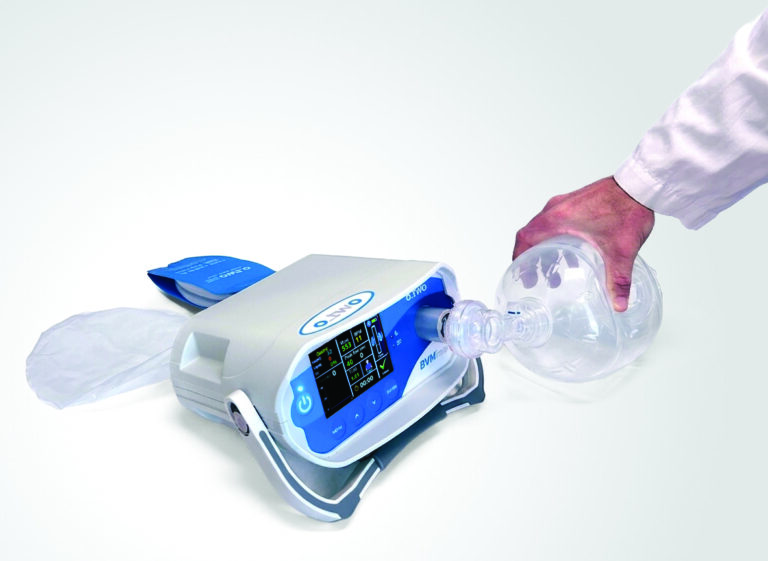
Bag-valve-mask (BVM) ventilation is a foundational lifesaving skill, but consistent performance can be difficult to achieve across different providers, patient sizes, and emergency scenarios.
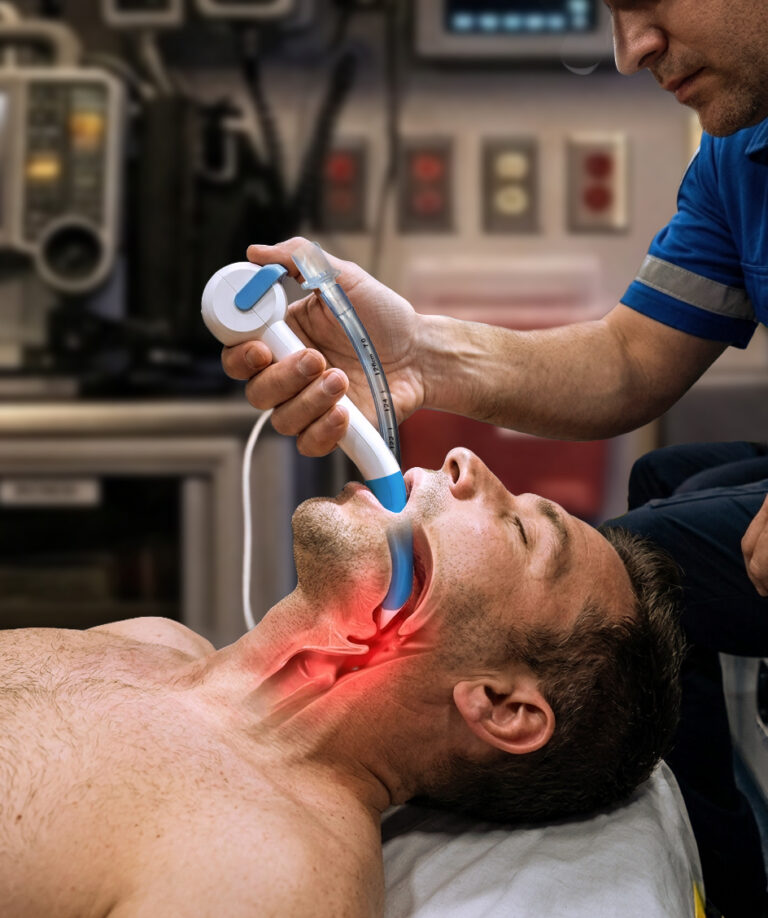
Airway management in emergency care is rarely predictable. A patient may be on the floor, inside a vehicle, in a moving ambulance, or positioned in a way that makes direct visualization difficult. Add trauma, obesity, restricted neck movement, secretions, or poor lighting, and a routine intubation can quickly become a challenging one…
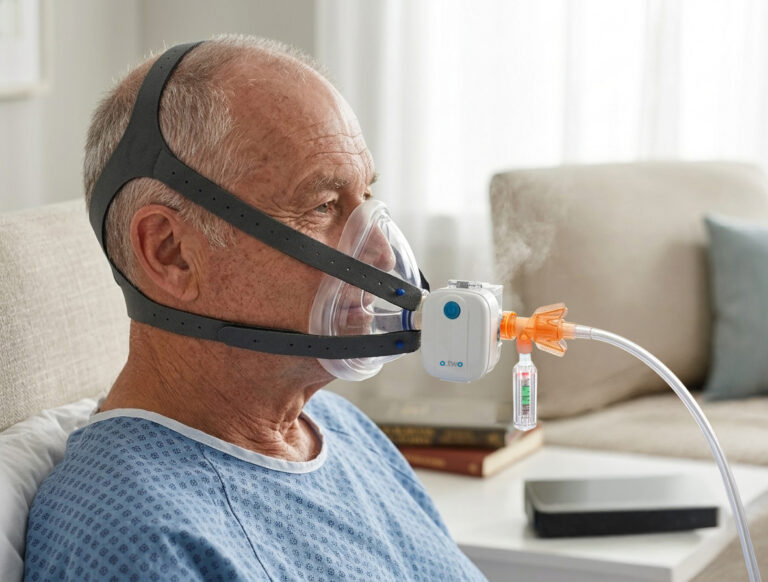
Aerosol medication delivery is a critical component of respiratory care in hospitals, emergency departments, ambulances, and prehospital environments. ..
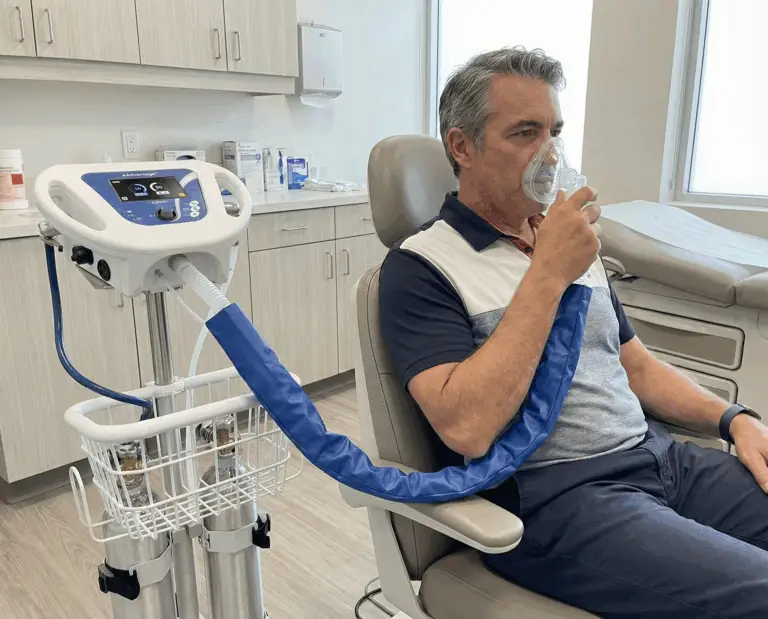
A new meta-analysis from the University of Birmingham reports that nitrous oxide—already widely used for pain relief—may offer quick, short-term improvement for people…
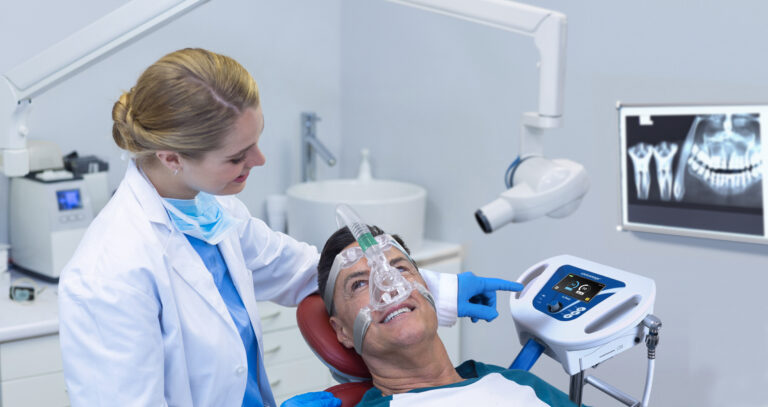
Nitrous oxide (N₂O), or “laughing gas,” has revolutionized modern dentistry by offering a safe and effective solution to dental pain and anxiety…
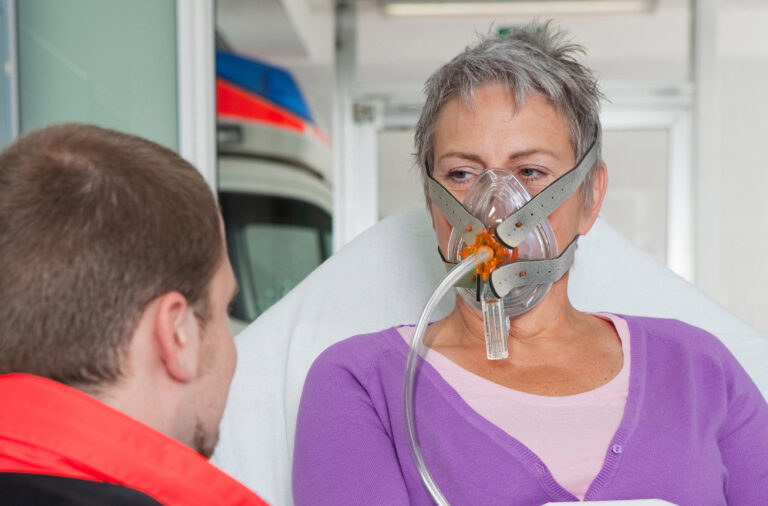
CPAP Therapy in Respiratory Care
Continuous Positive Airway Pressure (CPAP) is a game-changer for managing respiratory distress. It delivers constant airflow through a mask, keeping airways open…
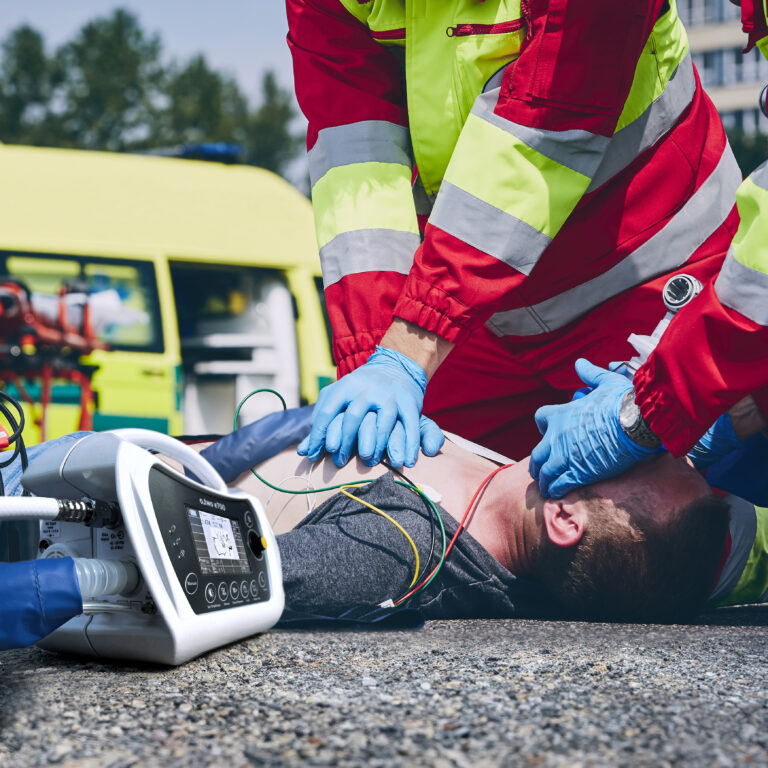
When seconds matter, the role of prehospital mechanical ventilation in trauma care can make a life-saving difference. Here’s what EMS providers need to know…

Nitrous Oxide in Labor Pain Management
Nitrous oxide is an inhaled analgesic widely used in labor pain management due to its rapid onset, short duration of action, safety profile, and ease of administration…
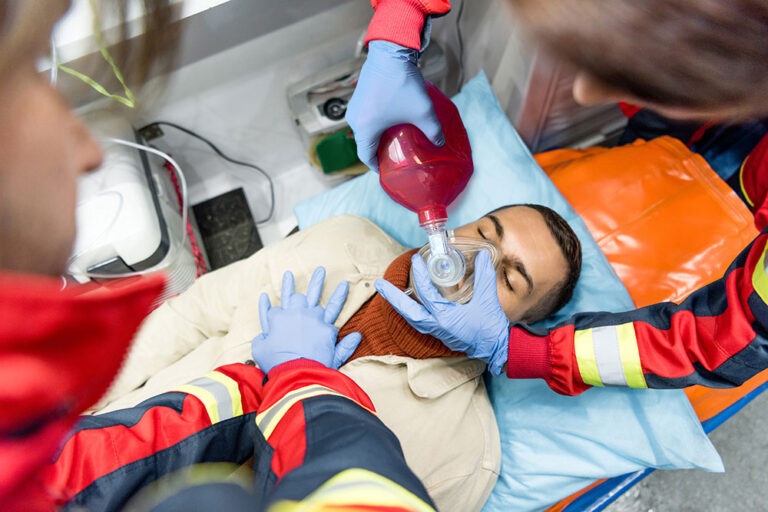
How the SMART Bag® MO Enhances Airway Management?
Manual ventilation using a bag-valve mask (BVM) is a standard practice in emergency airway management, but achieving consistent lung-protective ventilation…
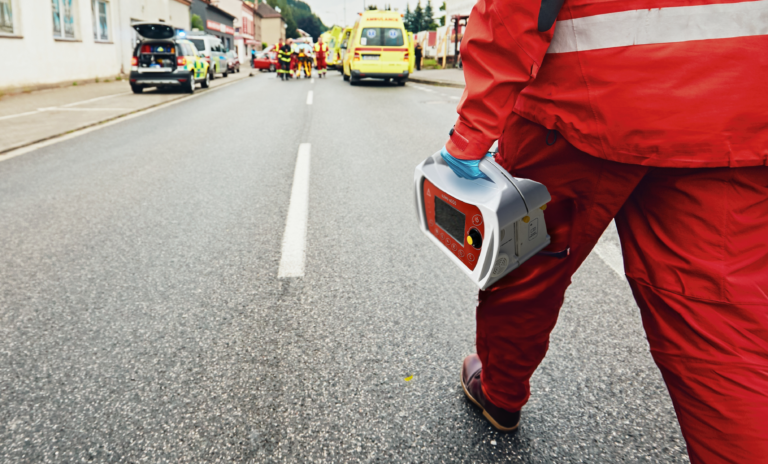
Why Transport Ventilators Matter in EMS?
In emergency medical situations, airway management and respiratory support are critical for patient survival. Traditionally, manual ventilation using a bag-valve-mask (BVM) has been the go-to method for EMS providers…