
Advancing Aerosol Therapy Across the Continuum of Care
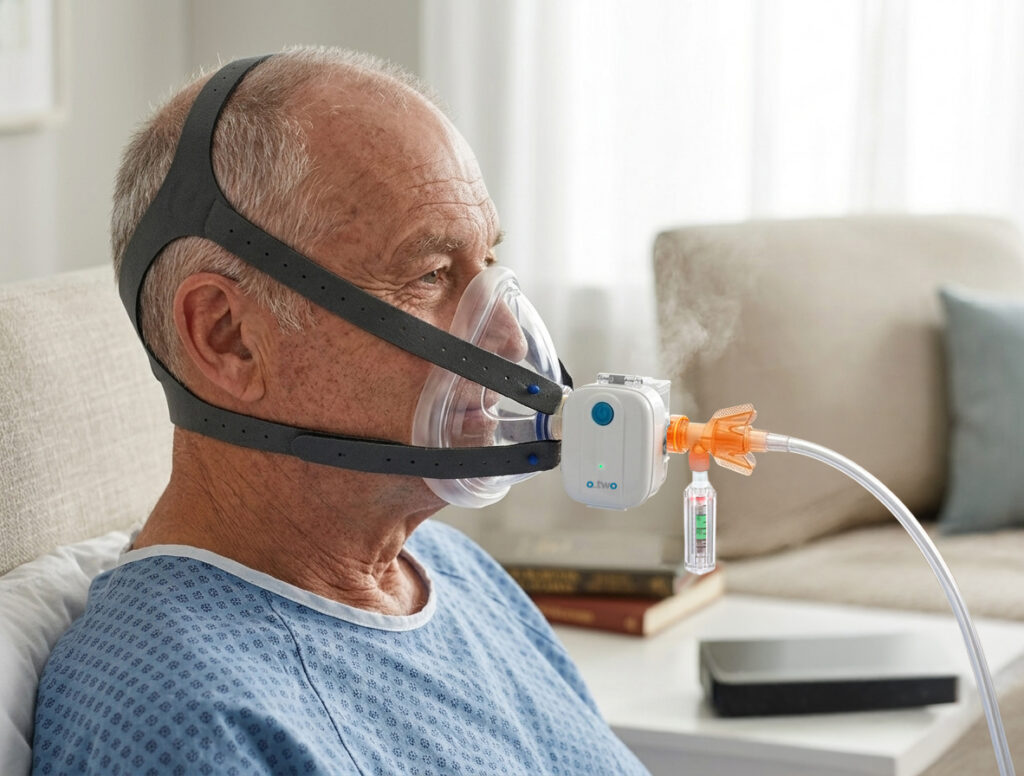
Aerosol medication delivery is a critical component of respiratory care in hospitals, emergency departments, ambulances, and prehospital environments. As healthcare providers increasingly require portable and efficient solutions that can perform reliably in a wide range of clinical settings, vibrating mesh technology has emerged as an important advancement in nebulization therapy.
The O-Two® Mesh Nebulizer is designed to meet these demands by providing a compact, battery-powered aerosol delivery system suitable for emergency medical services (EMS), transport medicine, respiratory therapy, acute care, and hospital applications. Utilizing active vibrating mesh technology, the device transforms prescribed liquid medications into a fine, consistent aerosol without the need for compressed air or oxygen sources.
Designed for Mobility and Clinical Flexibility
Traditional nebulizer systems often rely on wall air, compressed gas, or oxygen to generate aerosol therapy. While effective, these systems can limit mobility and consume valuable oxygen resources, particularly during patient transport or in resource-constrained environments.
The O-Two® Mesh Nebulizer addresses these challenges with a lightweight, portable design that allows healthcare professionals to administer aerosol therapy virtually anywhere. Whether at the bedside, during interfacility transport, in an ambulance, or in emergency response situations, clinicians can deliver treatment without dependence on external gas sources.
This flexibility not only simplifies treatment setup but also helps preserve oxygen supplies for patient oxygenation when oxygen resources are limited.
The Science Behind Vibrating Mesh Technology
At the heart of the O-Two® Mesh Nebulizer is a precision-engineered vibrating mesh membrane. This technology uses microscopic apertures within the mesh to generate aerosol particles from liquid medication, producing a fine and consistent mist for inhalation therapy.
Compared with conventional jet nebulizers, vibrating mesh systems have demonstrated several important clinical advantages, including:
- Higher aerosol delivery efficiency
- Lower residual medication volume
- Reduced medication waste
- More medication available for patient inhalation
- Consistent aerosol generation throughout treatment
These performance characteristics help maximize the effectiveness of prescribed therapies while improving medication utilization.
Evidence-Based Benefits in Emergency and Acute Care
Numerous clinical and laboratory studies have highlighted the advantages of vibrating mesh nebulization technology over traditional jet nebulizers. Research has shown that mesh nebulizers can provide higher delivered medication doses, improved aerosol deposition, and shorter treatment times.
For healthcare professionals working in emergency medicine, critical care, and transport environments, these benefits can translate into more efficient treatment delivery and streamlined patient care workflows.
Additionally, because the O-Two® Mesh Nebulizer operates independently of compressed air and oxygen, it supports rapid deployment in fast-paced clinical situations where simplicity, portability, and reliability are essential.
Supporting Patient Care Wherever It Is Needed
From hospitals and outpatient clinics to ambulances and prehospital emergency settings, modern respiratory care requires equipment that can adapt to diverse clinical environments. The O-Two® Mesh Nebulizer provides healthcare professionals with a transport-ready aerosol therapy solution that combines portability, efficiency, and clinically proven technology.
By delivering consistent aerosol performance without reliance on external gas sources, the O-Two® Mesh Nebulizer helps support effective respiratory treatment wherever patient care takes place, ensuring clinicians are prepared to provide therapy when and where it matters most.
Airway management in emergency care is rarely predictable. A patient may be on the floor, inside a vehicle, in a moving ambulance, or positioned in a way that makes direct visualization difficult. Add trauma, obesity, restricted neck movement, secretions, or poor lighting, and a routine intubation can quickly become a challenging one…
Airway management in emergency care is rarely predictable. A patient may be on the floor, inside a vehicle, in a moving ambulance, or positioned in a way that makes direct visualization difficult. Add trauma, obesity, restricted neck movement, secretions, or poor lighting, and a routine intubation can quickly become a challenging one…
Manual ventilation using a bag-valve mask (BVM) is a standard practice in emergency airway management, but achieving consistent lung-protective ventilation…
Continuous Positive Airway Pressure (CPAP) therapy is a fundamental non-invasive ventilation strategy for managing acute and chronic respiratory conditions…
Nitrous oxide is an inhaled analgesic widely used in labor pain management due to its rapid onset, short duration of action, safety profile, and ease of administration…
A new meta-analysis from the University of Birmingham reports that nitrous oxide—already widely used for pain relief—may offer quick, short-term improvement for people…
n emergency medical services (EMS), transport mechanical ventilators are essential for providing consistent and controlled respiratory support to…
When seconds matter, the role of prehospital mechanical ventilation in trauma care can make a life-saving difference. Here’s what EMS providers need to know…
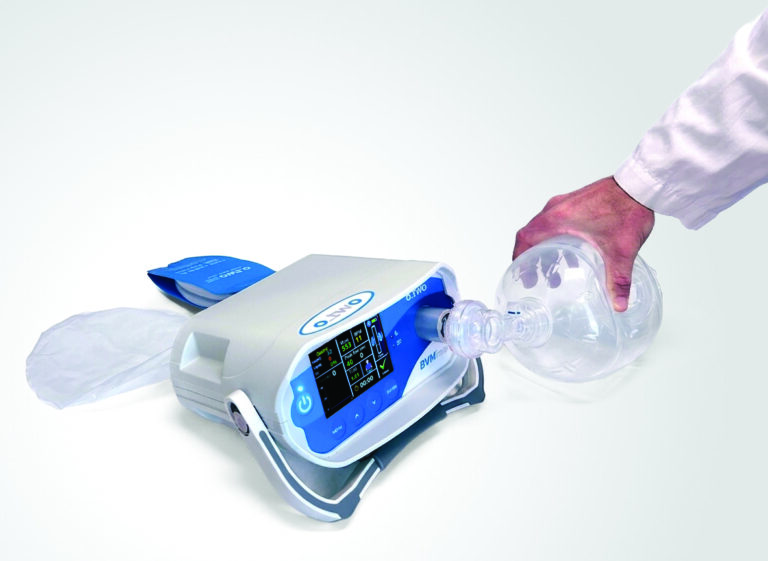
Bag-valve-mask (BVM) ventilation is a foundational lifesaving skill, but consistent performance can be difficult to achieve across different providers, patient sizes, and emergency scenarios.
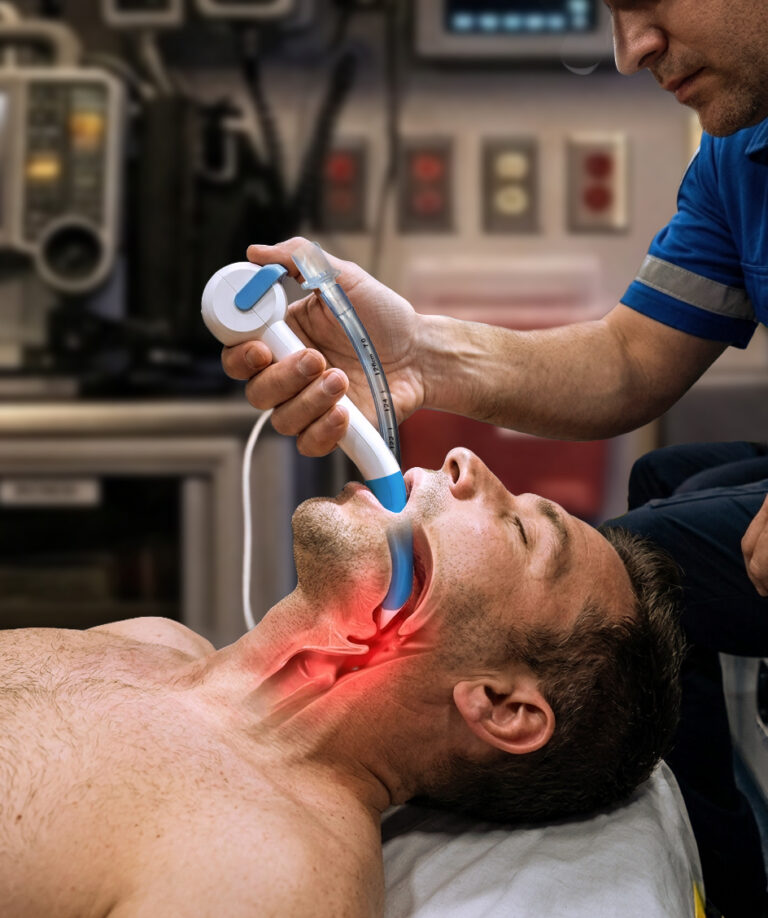
Airway management in emergency care is rarely predictable. A patient may be on the floor, inside a vehicle, in a moving ambulance, or positioned in a way that makes direct visualization difficult. Add trauma, obesity, restricted neck movement, secretions, or poor lighting, and a routine intubation can quickly become a challenging one…
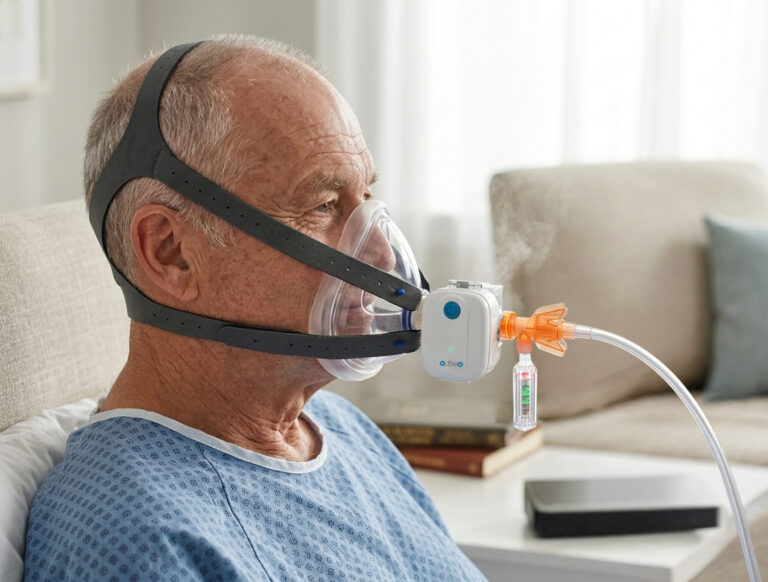
Aerosol medication delivery is a critical component of respiratory care in hospitals, emergency departments, ambulances, and prehospital environments. ..
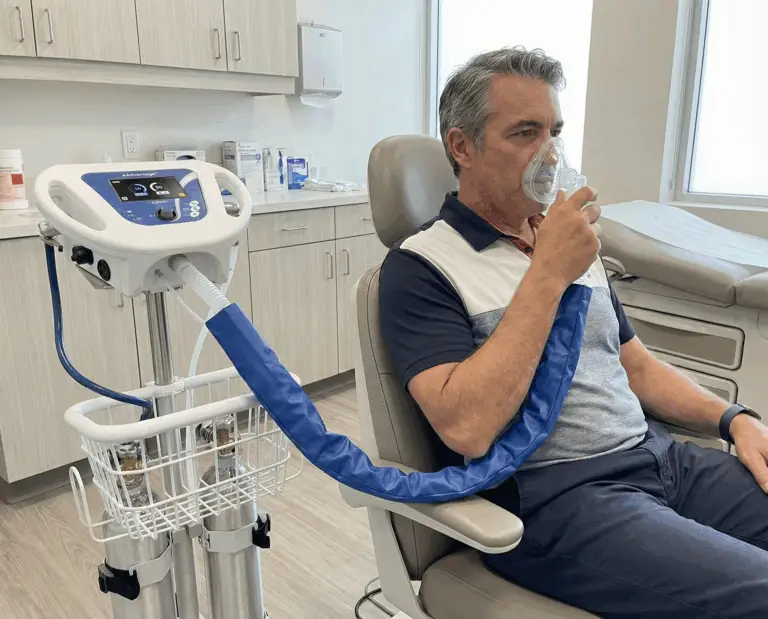
A new meta-analysis from the University of Birmingham reports that nitrous oxide—already widely used for pain relief—may offer quick, short-term improvement for people…
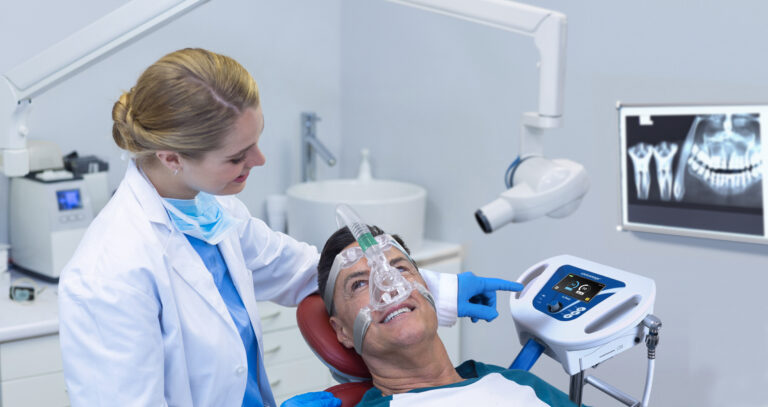
Nitrous oxide (N₂O), or “laughing gas,” has revolutionized modern dentistry by offering a safe and effective solution to dental pain and anxiety…
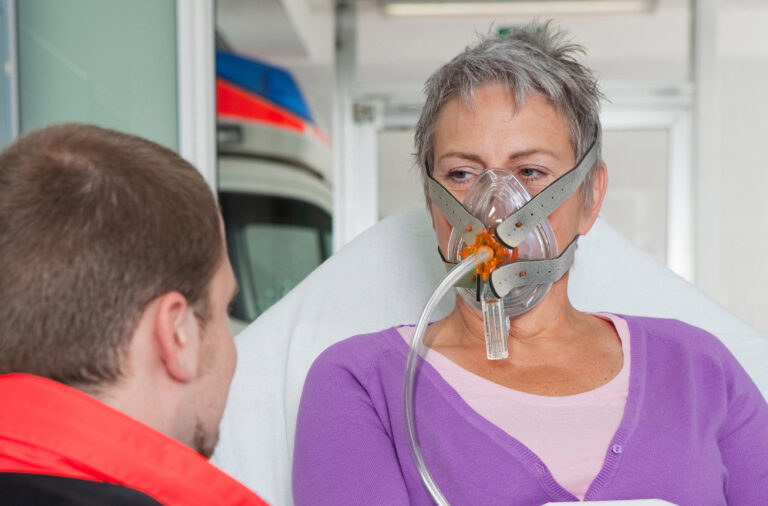
CPAP Therapy in Respiratory Care
Continuous Positive Airway Pressure (CPAP) is a game-changer for managing respiratory distress. It delivers constant airflow through a mask, keeping airways open…
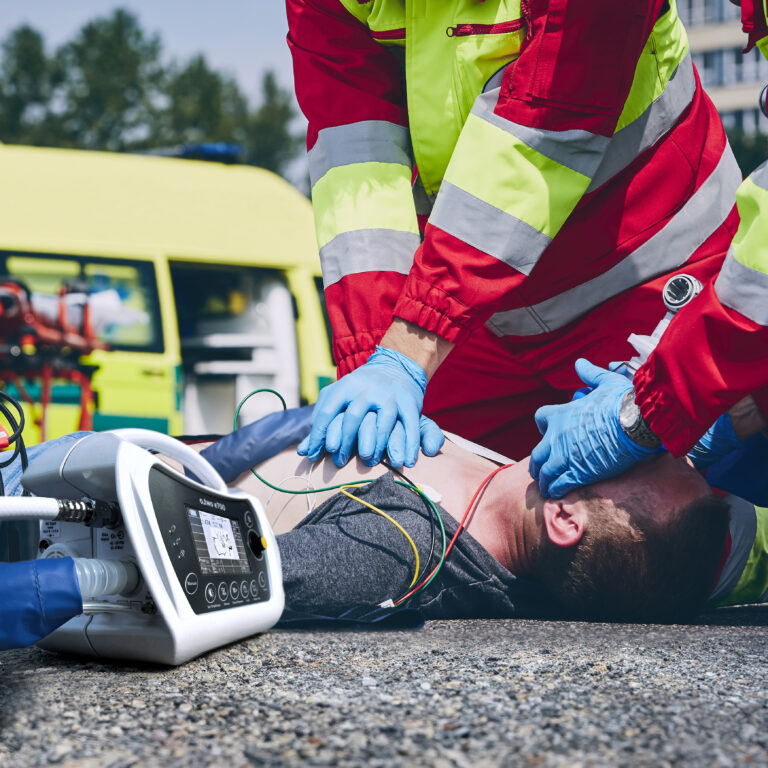
When seconds matter, the role of prehospital mechanical ventilation in trauma care can make a life-saving difference. Here’s what EMS providers need to know…

Nitrous Oxide in Labor Pain Management
Nitrous oxide is an inhaled analgesic widely used in labor pain management due to its rapid onset, short duration of action, safety profile, and ease of administration…
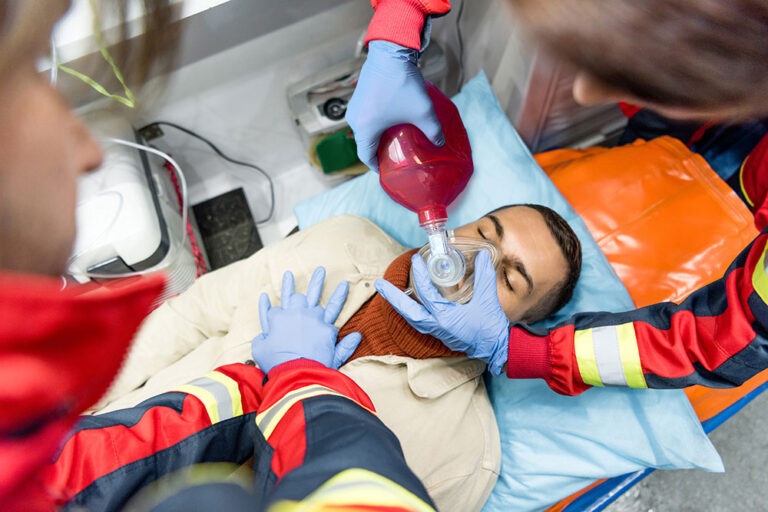
How the SMART Bag® MO Enhances Airway Management?
Manual ventilation using a bag-valve mask (BVM) is a standard practice in emergency airway management, but achieving consistent lung-protective ventilation…
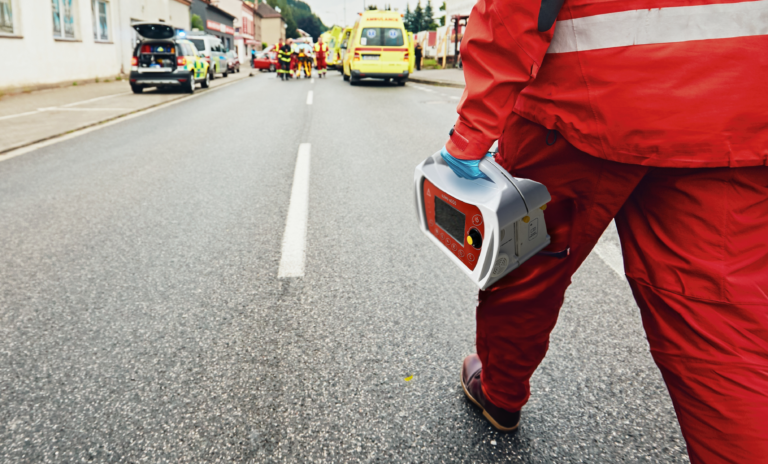
Why Transport Ventilators Matter in EMS?
In emergency medical situations, airway management and respiratory support are critical for patient survival. Traditionally, manual ventilation using a bag-valve-mask (BVM) has been the go-to method for EMS providers…